


“Data has always been part of my life, and I have always been fascinated by measuring and understanding how things work. At the same time, I have a strong interest in nutrition, health, and human performance, so I decided to turn this curiosity into an experiment on myself.” This is how the journey began for Elisabet Lopez, who studied Finance and Business administration before earning a master’s degree in Computing.
Elisabet moved from her home country Spain to Switzerland in 2019 and worked for Swarovski where she met her current boss, Thomas Bodé, MET Group’s Chief Digital Transformation Officer. She followed Thomas and joined MET in 2022 as Senior Business Intelligence Manager.
How do you transform complexity into clarity? For Elisabet Lopez, that question has been at the centre of her career in data and analytics for more than a decade. At MET Group, she combines technical expertise with a passion for making information accessible and actionable through effective reporting and data-driven decision-making. “MET is intellectually stimulating in the best sense of the word. You are constantly challenged by smart people, diverse perspectives, and complex problems worth solving,” she says.
As data intrigues Elisabet beyond professional activities too, she decided to launch a personal experiment. Using various devices, she started measuring – among other things – her glucose level, heart rate, body temperature, and sleep.
Elisabet originally only shared her findings with friends and family, but after eight years of experimentation, she decided to publish the book HER in April 2025. Contrary to what the title might suggest, the book is not about feminism, she emphasizes, but rather a science-backed exploration of human performance.
The Senior Business Intelligence Manager wanted to combine scientific research with her own experiences in a way that is accessible and practical. She became fascinated by how the body and mind respond to everyday situations – for example, how a routine meeting can trigger physiological reactions similar to those caused by food intake.
“What surprised me most was not the lack of information, but how fragmented it was. The science exists, but it is spread across books, studies, podcasts, and different disciplines. I wanted to bring those pieces together and translate them into something people could actually understand and apply in their daily lives,” Elisabet explains.
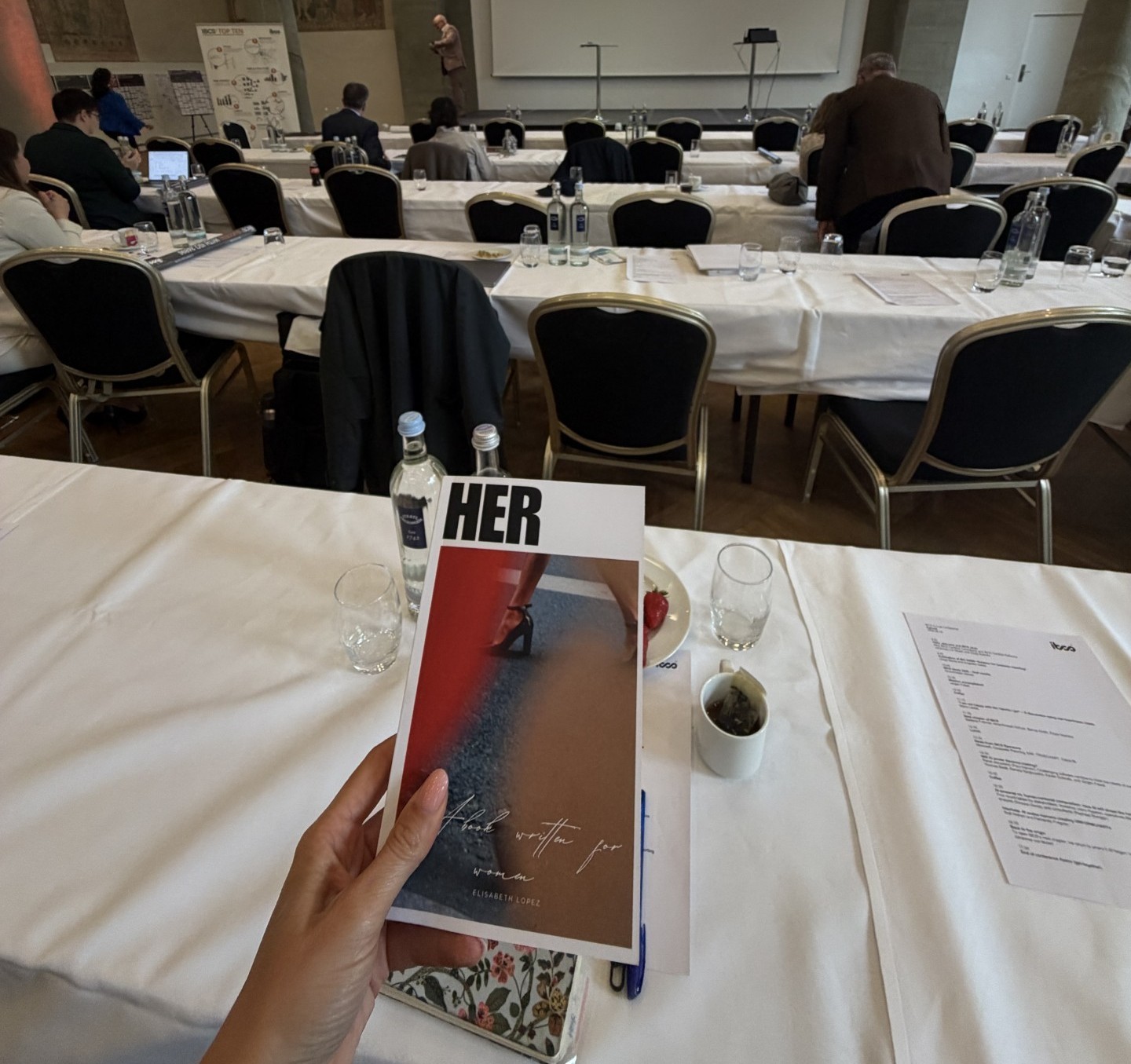
Although Elisabet did not undertake any promotion beyond her immediate cycle, the book HER has reached more than 700 women through word of mouth and has also been positively received by male health coaches, personal trainers, and influencers.
The MET expert is convinced that our bodies are the most advanced data system we have – we just need to know how to interpret it. “The information is there, you are just not listening, or not able to read it,” she explains.
MET Group colleagues have strongly connected with the book. As Elisabet recalls: “I have received very deep, personal messages from colleagues. The book shares many of my personal experiences, which I think is why so many people can relate to it.”